
Follow the conference on social media #NHSDelirium
Delirium is a serious, but modifiable patient safety issue. It remains frequently unrecognised or mislabelled, leaving many people without a clear explanation for what happened to them, and is associated with increased risk of falls, longer hospital stays, discharge delays, readmission, cognitive decline, increased care needs and mortality.
“Delirium is a serious, but modifiable patient safety issue…We estimate that delirium cost the NHS in England a total of £10.8 billion in 2022, but up to a third of cases are preventable.”
Delirium Matters: priorities and opportunities for health and social care policy in England 2025
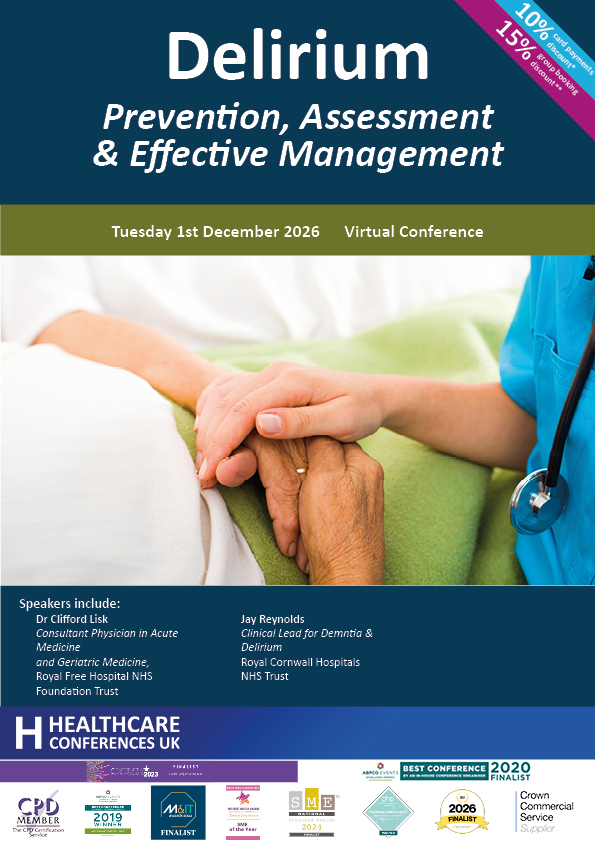
This conference focuses on the prevention, assessment and effective management of people with delirium. Through national updates, lived experience and practical case studies, the conference will support delegates to improve early recognition, assessment, prevention and management across hospitals, surgery, emergency care, critical care, community services and care homes.
The conference will provide updates on national policy, evidence and practice, including Delirium Matters, the NIHR James Lind Alliance Delirium UK Priority Setting Partnership, the 2025 Intensive Care Society guidance on delirium in the critically ill patient, the 2026 National Audit of Dementia Healthcare Quality Improvement Plan, and the NHS 10 Year Health Plan.
The programme will also focus on practical approaches to delirium prevention, structured screening, prescribing, medication review, frailty, post-operative delirium, distress, critical care delirium and delirium at the end of life.
“Structured assessments provide an objective and consistent measure of key elements of care.”
National Audit of Dementia Healthcare Quality Improvement Plan, January 2026
This conference will enable you to:
Network with colleagues who are working to improve practice in the prevention, recognition, assessment and management of delirium
Understand delirium as a serious, modifiable patient safety issue
Reflect on lived experience and the impact of delirium on patients, families, carers and staff
Learn from national developments including Delirium Matters, the NIHR James Lind Alliance Delirium UK Priority Setting Partnership, World Delirium Awareness Day 2026 and the NHS 10 Year Health Plan
Understand the implications of the 2025 Intensive Care Society guidance on delirium in the critically ill patient
Reflect on the 2026 National Audit of Dementia Healthcare Quality Improvement Plan and the importance of structured assessment for delirium, pain and nutrition
Improve early recognition and assessment of delirium, including proactive case finding
Explore the use of structured assessment tools and digital prompts to improve recognition, documentation and escalation
Improve practice in delirium prevention, including hydration, nutrition, mobility, pain management, sleep, medication review and family involvement
Understand the links between delirium, dementia, frailty and cognitive decline
Improve prescribing practice and reduce cognitive side effects, anticholinergic burden and avoidable medication-related harm
Learn how to reduce confusion and delirium following surgery
Improve the recognition and management of delirium in people with frailty
Develop your approach to reducing and managing distress in patients experiencing delirium
Understand when to use non-pharmacological and pharmacological approaches, and the thresholds for escalation
Improve psychological care and family support for patients experiencing ICU-associated delirium
Learn from best practice in managing delirium at the end of life
Improve communication with patients, carers, families, GPs, care homes and community services
Explore how delirium champions can support culture change, education and sustained improvement
Improve practice in hospitals, emergency departments, surgery, critical care, community services and care homes
Self-assess and reflect on your own practice
Supports CPD professional development and acts as revalidation evidence. This course provides 5 Hrs training for CPD subject to peer group approval for revalidation purposes